The term SOS is widely recognized, especially in tales of ships facing disaster or urgent emergencies. But what does this iconic signal truly mean in the context of morse code distress communication? Far from being a random jumble of beeps and flashes, SOS stands as the universal signal for help worldwide. Its clarity and simplicity have secured its place as a crucial part of communication history.
What exactly is the morse code for sos?
SOS is neither an abbreviation nor an acronym, despite frequent attempts to assign phrases to it over time. The reason for its adoption lies in how straightforward and easy it is to transmit—regardless of language differences or challenging conditions.
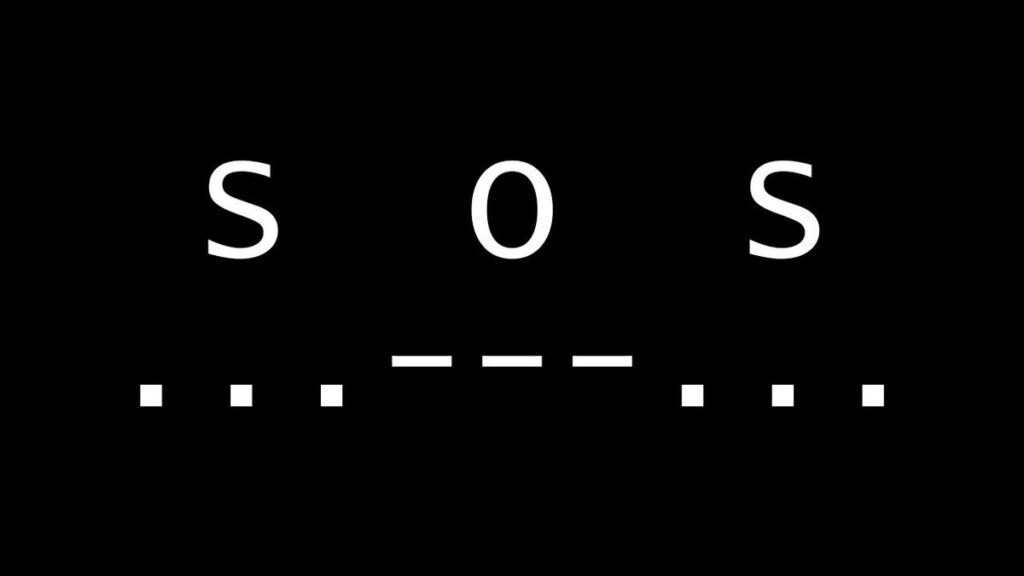
In formal morse code notation, SOS is sent as three dots, three dashes, and three dots without any gaps between the letters. Represented visually, it appears as:
- S: three dots ( … )
- O: three dashes ( — )
- S: three dots ( … )
Why was sos chosen for emergencies?
The morse code for sos became the standard because no other combination offered such unmistakable clarity with so little risk of confusion. It can be transmitted via sound, light, or written signals, making it highly versatile. Its simplicity ensures recognition under pressure, when every moment matters.
This international distress signal is instantly recognizable due to its unique pattern: three short signals, three long, then three short again. This rhythm sets it apart from routine messages and led to its replacement of older, less efficient codes.
How is sos used in maritime and emergency settings?
Morse code gained global prominence in maritime and emergency contexts thanks to its reliability and adaptability. In situations involving power failures, radio breakdowns, or poor visibility, crew members could send out calls for help using even the most basic equipment.
The ability to broadcast the distress call through various means allowed SOS to become standard at sea, later spreading to aviation and land-based emergencies. Professionals are trained to recognize these vital patterns, ensuring they remain effective life-saving signals.
Breaking down sos: understanding the components
Three dots three dashes three dots: practical formation
The famous sequence—three dots, three dashes, three dots—is designed for ease of use, whether tapping, flashing, or beeping out the message during stressful moments. Short signals represent S, while longer ones stand for O. No spaces break up the flow, guaranteeing immediate understanding by anyone listening. In critical moments, there is simply no room for doubt.
Whether using taps or light flashes, maintaining a consistent pattern remains essential. Training often emphasizes that “S” consists of three quick marks and “O” of three drawn-out sounds, promoting accuracy for both sender and receiver.
Sound of morse code sos: how is it transmitted?
Transmitting SOS audibly involves creating a distinctive rhythm, allowing listeners to quickly identify the urgency. Typically, it sounds like: beep-beep-beep, beeeeeep-beeeeeep-beeeeeep, beep-beep-beep. Each segment is distinct, yet the entire sequence flows as one cohesive unit.
This makes the distress signal effective even amid background noise or unreliable connections. Light signals serve a similar purpose, proving invaluable when audio isn’t possible. Lighthouses, flashlights, and improvised lights have all played key roles throughout history in sending this signal.
Different methods for sending and receiving sos
Taps and knocks in limited-resource scenarios
When technology fails, even the simplest resources make a difference. Prisoners, lost hikers, or individuals trapped after disasters have communicated using the sound of morse code sos by tapping or banging on surfaces to attract rescuers’ attention. Rescuers listen carefully for the steady pattern, translating hope into action during dire circumstances.
Rescue teams stay alert for repeated sequences resembling the clear-cut three-dot, three-dash order. Emergency protocols often include training to interpret these desperate messages swiftly and accurately.
Visual signals: light flashes and more
Low-visibility or nighttime situations require alternative approaches. Flashing a light three times quickly, followed by three long flashes, and repeating three more quick flashes can convey crucial information to distant boats or aircraft. Sometimes, smoke or sunlight reflections substitute for electronic devices, preserving the universal nature of the morse code for sos.
No special equipment is required—just persistence in repeating the pattern until someone notices. Because the sequence stands out sharply compared to irregular natural sounds or movements, visual cues often succeed even when spoken communication is impossible.
SOS in modern contexts
While digital and satellite communications now dominate rescue operations, the morse code for sos still holds importance. Lifeboats, emergency beacons, and amateur radio operators continue to practice this essential signal. Many safety courses recommend learning its structure as a precautionary measure.
Emergency organizations keep the tradition alive through ongoing drills and public education. Familiarity with SOS ensures that in moments of genuine crisis, the international signal will not go unnoticed.
Common misconceptions about sos
It is a common misconception that SOS stands for “Save Our Ship” or similar expressions. While memorable, these interpretations do not reflect the true origin—the choice was made solely for its clarity and efficiency, not for any mnemonic value. Its use emerged strictly from the need for instant, universal comprehension.
Popular culture and cinema sometimes depict SOS inaccurately. By adhering to the simple three-short, three-long, three-short structure, both rescuers and those needing help avoid confusion and ensure their message is understood.
More about the signal: frequently asked questions
Is sos actually an abbreviation or acronym?
SOS is not an abbreviation or acronym for any particular words. Although frequently linked to phrases such as “Save Our Ship,” the real reason behind its selection was the simplicity and unmistakable morse code sequence—three dots, three dashes, three dots. This made it ideal for urgent communication without ambiguity.
- No official meaning for each letter
- Chosen purely for ease of recognition and signaling
What is the formal morse code notation for sos?
Formal morse code notation for SOS is three dots, three dashes, three dots without extra spaces:
… — …
For comparison, here is how “SOS” differs from other options:
| Code | Sequence | Complexity |
|---|---|---|
| SOS | … — … | Low |
| HELP | …. . .-.. .–. | Higher |
How do people transmit sos if there’s no technology?
Even without radios or electronics, SOS can be sent using basic tools. Tapping pipes, knocking on walls, or flashing handheld lights all communicate the same message across distances. Consistency and rhythm are essential for accurate identification.
- Taps (short for dot, long for dash)
- Light flashes with lanterns or flashlights
- Flag waves or reflected sunlight in the correct pattern
Emergency responders are trained to listen for these rhythms and to react promptly to persistent SOS signals.
Does the sound of morse code sos always work in a rescue?
The distinctive sound of morse code sos—three short, three long, three short—generally cuts through background noise effectively. However, factors such as storms or distance can reduce its effectiveness. Combining several methods, like sound and light together, increases the likelihood of detection and timely rescue.
- Combining tap-and-knock with visible light boosts noticeability
- Repeating the pattern keeps focus on the distress call