Morse code remains a source of fascination, bridging historical communication methods with today’s technology. In this language of signals, each character is defined by a unique sequence of morse code symbols—dots and dashes. The letter ‘w’ stands out for its distinctive rhythm, raising questions about how to write w in morse code, the reasons behind its pattern, and the process of morse code translation. This guide explores the representation of w in morse code, highlighting its place within the morse code alphabet and its practical uses.
Basics of morse code and the morse code alphabet
The morse code system uses short and long signals—known as dots and dashes—to encode letters, numbers, and basic punctuation. Developed in the early 19th century, it became essential for ship-to-ship and telegraphic communication worldwide. The international morse code standard now defines consistent codes for every character, ensuring global understanding.
Within the morse code alphabet, each English letter receives a specific sequence designed for easy transmission and clarity. These structured patterns make morse code approachable for puzzle enthusiasts and those interested in radio operation alike.
The core elements: dots and dashes
In morse code, a dot represents a quick pulse or sound, while a dash lasts three times longer than a dot. Short pauses separate symbols within a single character, and longer pauses distinguish between letters and words. This rhythmic structure is vital for accurately transmitting and receiving encoded messages.
Recognizing these differences becomes easier through practice in encoding and decoding text, allowing individuals to grasp not just the presence of a signal but also its intended meaning. Mastery of these core morse code elements lays the groundwork for learning specific characters such as w in morse code.
Morse code for letters and numbers
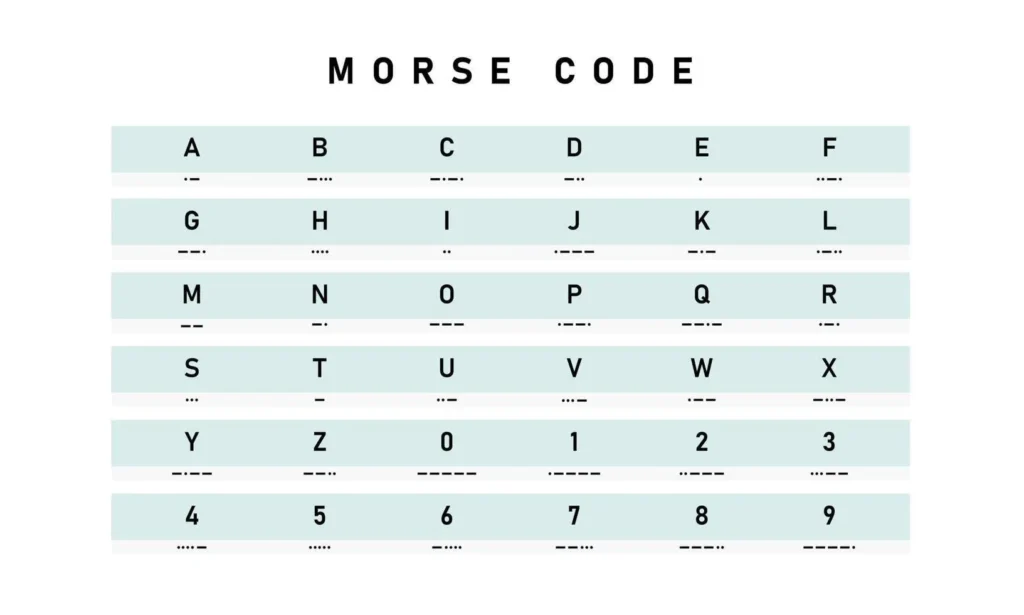
Every letter from A to Z, and each number from 0 to 9, has its own unique combination within the international morse code standard. Some letters are represented by simpler sequences, while others—including ‘w’—feature more complex arrangements. Numbers typically use five-symbol sequences to differentiate them from alphabetic characters.
Becoming fluent in the morse code for letters and numbers speeds up translation and boosts accuracy. Effective learning often involves memorizing frequent combinations and testing knowledge regularly, whether through spelling drills or online morse code translator tools.
What is the representation of w in morse code?
The letter ‘w’ holds a notable position in the morse code alphabet. Its symbol combines the rapidity of a dot with the emphasis of two dashes, giving it a memorable rhythm that distinguishes it from other letters.
Anyone studying how to write w in morse code benefits from understanding both the visual pattern and the audio cue, making recognition and reproduction much more intuitive.
Visual and audio format of w in morse code
When written, the representation of w in morse code consists of one dot followed by two dashes. Specifically:
- Dot – Short signal
- Dash – Long signal
- Dash – Long signal
This means that ‘w’ appears as .–. Spoken aloud during morse code translation exercises, it sounds like “di-dah-dah.”
Encoding and decoding the letter w
Consistent practice with individual letters helps both beginners and experienced users of morse code. Working repeatedly with encoding and decoding text containing ‘w’ strengthens familiarity and builds fast recognition. The distinct “dot-dash-dash” sequence is easy to identify, even in challenging listening situations.
Modern morse code translator tools enhance learning by instantly converting text into strings of dots and dashes or playing accurate audio tones. Immediate feedback from these resources reinforces understanding of the morse code signals for ‘w’ and other characters.
Practical uses and importance of w in morse code
Including all letters—such as ‘w’—is essential for clear and complete message transmission. Omitting even a single symbol could lead to miscommunication or altered meanings. Given how frequently ‘w’ occurs in English, mastering its morse code version remains highly useful.
Morse code training emphasizes both accuracy and speed, particularly for common letters. By practicing ‘w’ alongside other frequent characters, individuals can transmit and interpret messages more efficiently—a valuable skill in amateur radio and emergency scenarios.
Situations where w appears in coded messages
The letter ‘w’ features in many words and abbreviations sent over morse networks. For example, some communication protocols begin call signs or weather reports with ‘w’, making instant recognition important.
Professionals depend on clarity when sharing distress signals, navigation details, or routine correspondence. Since confusion over ‘w’ can introduce errors, regular practice with morse code symbols sharpens both listening and sending skills in real-world conditions.
Leveraging morse code translator tools
Morse code translator tools have greatly simplified the learning process. Web-based platforms support users by converting plain text into precise morse code sequences or generating corresponding audio signals at the click of a button.
Testing knowledge with these translators promotes better retention and makes it easy to verify the correct representation of w in morse code during study sessions.
- Test retention with daily translation exercises
- Create flashcards showing ‘.–‘ to reinforce memory of the letter
- Compare versions of the morse code alphabet across eras to observe changes and improvements
Frequently asked questions about w in morse code
What is the exact morse code for the letter w?
The letter w in morse code is represented by a dot followed by two dashes: .– This translates visually as:
- Dot (·)
- Dash (–)
- Dash (–)
In spoken form, this pattern is pronounced “di-dah-dah.” Memorizing this helps with quick morse code translation.
How does the morse code for w compare to similar letters?
Within the morse code alphabet, ‘w’ (.–) resembles letters that start with dots or end with dashes, such as d (-..), g (–.), and r (.-.). Comparing these sequences helps reduce mistakes during encoding and decoding text. Practicing sets of similar-sounding letters increases confidence:
| Letter | Morse Code |
|---|---|
| w | .– |
| d | -.. |
| g | –. |
| r | .-. |
Which tools can assist with learning the representation of w in morse code?
Those studying morse code benefit from using morse code translator tools and mobile apps tailored for practice. These solutions enable immediate conversion between plain text and morse code symbols, offer repeated playback for auditory learning, and provide instant error correction. Regular use of these resources reinforces the link between letters such as ‘w’ and their code equivalents, supporting active recall and spaced repetition.
- Online morse code converters
- Audio training programs
- Printable charts featuring the morse code alphabet
Why does w have its particular sequence in morse code?
The assignment of .– to ‘w’ follows the logic used in developing the morse code alphabet: less common letters generally received longer or more complex codes. Designers aimed to make frequent letters quick and simple to transmit. Because ‘w’ appears less often than many vowels or consonants, it was assigned a slightly longer sequence.