Within the fascinating world of dots and dashes, one letter captures attention for its powerful echoes in both history and music: “V.” The Morse code for V is more than just a simple sequence—it carries deep symbolism, from wartime messages to iconic musical motifs. Exploring how “V” evolved into a cultural emblem reveals why enthusiasts still speak with enthusiasm about dit-dit-dit-dah today.
Understanding the basics of Morse code
Morse code is a communication system that uses sequences of dots and dashes to represent letters, numbers, and punctuation marks. Developed in the early 19th century, this method became essential for long-distance communication before the advent of voice transmission.
The beauty of Morse code lies in its simplicity—anyone with basic training could quickly send or interpret coded messages. Mastering these patterns, including the Morse code alphabet entry for “V,” opened up possibilities for secret messages, emergency signaling, and sharing historic news bulletins across continents.
How is “V” encoded in Morse code?
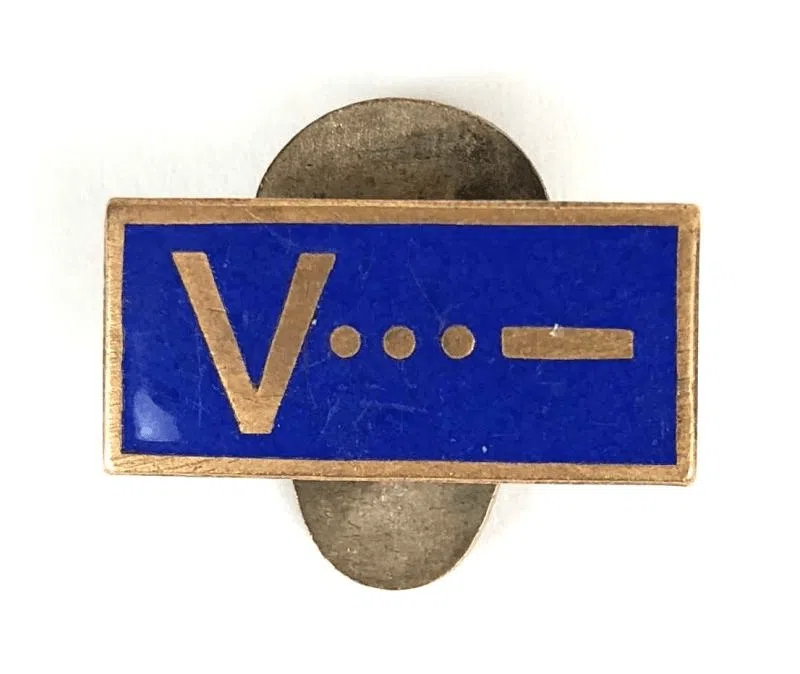
Each letter in the Morse code alphabet receives its own pattern of short (dots or dits) and long (dashes or dahs) sounds. For “V,” the assigned sequence is …-, spoken as “dit-dit-dit-dah.” This distinctive rhythm features three rapid beats followed by a drawn-out note, making it stand out among other letters.
This recognizable pattern allows operators to identify “V” easily during fast transmissions. Many learners find that practicing “V” helps them internalize Morse code rhythms, thanks to the memorable quality of its sound and pacing.
The links between “V,” history, and culture
The letter “V” carries significant weight beyond being just another character in the Morse code alphabet. Over time, it has become an enduring symbol of hope, resistance, and artistic expression.
World war II symbolism and “V for victory”
During World War II, the phrase “V for Victory” emerged as a unifying slogan across Allied nations. Winston Churchill popularized the now-famous hand gesture—index and middle fingers forming a “V”—to symbolize triumph and defiance. Soon, the Morse code translation of “V” (“dit-dit-dit-dah”) was broadcast on radio waves and echoed in public spaces, reinforcing unity and morale. Citizens even replicated the motif on drums and car horns to communicate solidarity under occupation.
This creative use of Morse code rhythms transformed the technical signal for “V” into a rallying badge of courage. It transcended mere communication, serving as a subtle form of encouragement and clandestine coordination in difficult times, appearing everywhere from posters to everyday interactions.
Beethoven’s fifth symphony motif and Morse code
The opening notes of Beethoven’s Fifth Symphony are famously described as “short-short-short-long.” Remarkably, this musical phrase perfectly mirrors the Morse code for V: dit-dit-dit-dah. Allied broadcasters often began programs with this motif, merging music with message to inspire hope and unity.
This symbolic connection between classical music and Morse code rhythms continues to intrigue listeners. It demonstrates how art and communication can intertwine, especially during pivotal moments in history. The next time a familiar orchestral theme plays, there may be a hidden message within those notes.
The place of “V” alongside other Morse code symbols
While every letter in the Morse code alphabet has a unique signature, “V” enjoys special status due to its distinct sonic and visual identity. Learning the Morse code translation for each letter unlocks new ways to connect, whether tapping out messages across a room or signaling over great distances.
The effectiveness of Morse code relies on clear, repeatable patterns. “V” stands apart thanks to its combination of repetition (three quick pulses) and anticipation (a final longer sound). Compared to simpler characters like “E” (.) or “T” (-), the extended beat of “V” ensures instant recognition within any sequence.
“V” in numbers, puzzles, and learning tools
Beyond representing a letter, “V” also serves as the Roman numeral 5. Students learning both mathematics and Morse code might notice this clever overlap. Educators and puzzle creators frequently use this dual meaning to design engaging challenges that foster curiosity about language, numbers, and codes.
For many beginners, memorizing Morse code becomes easier when paired with relatable examples. Connecting the Morse code for V to the motif in Beethoven’s Fifth Symphony or the “V for Victory” campaign helps reinforce retention. Whether through rhythmic clapping, flashcards, or storytelling, associating symbols with real-life contexts makes learning enjoyable and effective.
- Roman numeral V equals 5.
- Beethoven’s Fifth Symphony and “V” in Morse code share the same rhythm.
- The “V for Victory” campaign relied on Morse code for covert communications.
- Children often learn “V” using rhythm and repetition exercises.
The role of Morse code rhythms and “V” in modern times
Even in today’s digital era, the charm of Morse code endures in amateur radio clubs, educational kits, and emergency equipment. Enthusiasts delight in exploring Morse code rhythms, blending tradition with modern technology. “V” remains a favorite letter for demonstrations, largely because the sequence “dit-dit-dit-dah” is so satisfying to transmit and hear.
For hobbyists aiming to master the Morse code translation for various characters, practicing “V” sharpens timing, accuracy, and listening skills. Revisiting its historical connections fosters appreciation for the rich ties between communication, conflict, and popular culture.
Answers to common questions about “V” in Morse code
What is the Morse code for V?
The Morse code for V consists of three dots followed by a dash: …-. In spoken terms, this translates to “dit-dit-dit-dah.” Its unique pattern is instantly recognizable and has played a role in several important historical and cultural moments.
- Symbol: …-
- Spoken: dit-dit-dit-dah
Why does the Beethoven’s Fifth Symphony motif relate to Morse code?
The famous opening of Beethoven’s Fifth Symphony follows a “short-short-short-long” rhythm, which matches the Morse code rhythm for the letter V. During World War II, this connection was used intentionally in broadcasts to evoke victory and perseverance.
- Musical motif: short-short-short-long
- Morse code for V: …- (dit-dit-dit-dah)
How did “V” become a symbol during World War II?
The letter “V” gained prominence as a sign of victory after Winston Churchill introduced both the gesture and the corresponding Morse code rhythm. The pattern “dit-dit-dit-dah” became shorthand for resilience, widely broadcast, displayed, and referenced in secret communications.
| Aspect | Details |
|---|---|
| Gestures | Hand sign “V” |
| Sound motif | Dit-dit-dit-dah |
| Purpose | Morale and coded messaging |
How do educators teach the Morse code for V to beginners?
Instructors highlight the catchy Morse code rhythm of “V”—three quick pulses and a long beat—to help students remember. Techniques include repeating “dit-dit-dit-dah,” clapping or tapping the sequence, and linking it to well-known references such as Beethoven’s Fifth Symphony or Roman numeral puzzles.
- Rhythm-based clapping or drumming exercises
- Associations with music and historical symbols
- Visual flashcards showing dots and dashes