Morse code stands as a timeless method for transmitting information with simple signals, deeply woven into the history of communications. Each letter is defined by a unique pattern built from dots and dashes, making every symbol distinct. The letter “t” holds particular significance due to its straightforwardness and clarity. Understanding how “t” is represented, how to identify it, and where it might appear—such as in crossword clues—reveals valuable insights for anyone intrigued by Morse code.
Understanding morse code as telecommunications method
Morse code serves as a foundational telecommunications tool that converts text into sequences of audible or visual symbols. By using short (dot) and long (dash) signals, it enables clear communication even under challenging conditions like radio silence or flashing lights.
This method became especially important during the early days of telegraphy, ship-to-shore messaging, and wartime transmissions. These uses cemented its reputation as a reliable language for fast, dependable message delivery across distances.
The basics: morse code symbols and their meanings
The essence of Morse code lies in mastering its symbols. Every alphanumeric character follows a specific sequence of dots and dashes, often referred to as “dits” and “dahs.” This system’s simplicity and efficiency allow for rapid, accurate transmission when practiced consistently.
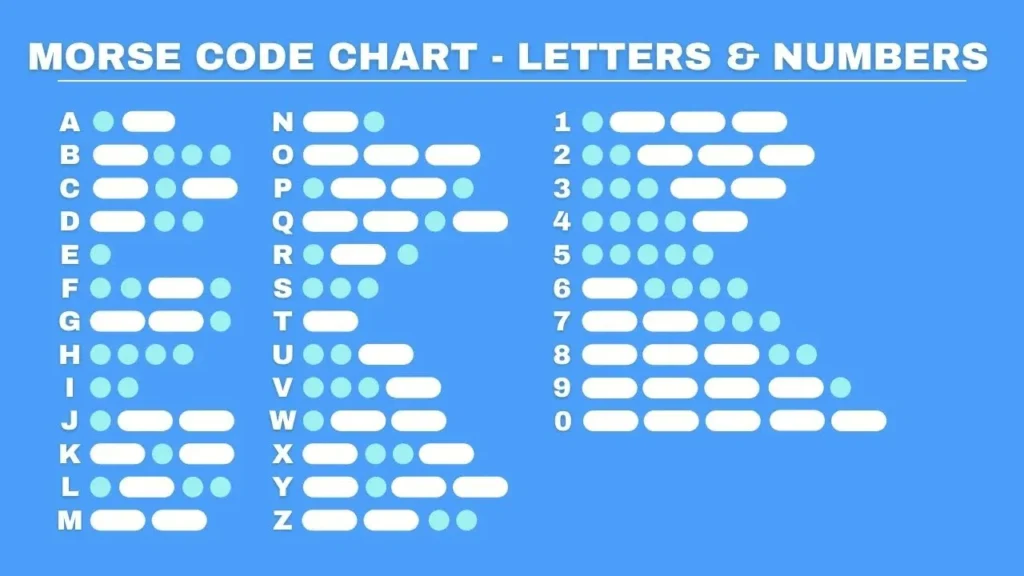
An international morse code chart lists these combinations for all letters and numbers, displaying them in easy-to-follow patterns. This resource proves invaluable both for decoding messages and learning how to type Morse code, whether by hand or with digital devices.
Morse code for letter t: a single dash
The representation of t as a dash in morse code sets it apart as one of the simplest symbols to transmit and recognize. While most letters combine multiple dots and dashes, “t” is unique—it consists of just one dash without any accompanying dots.
This simplicity makes the letter “t” an ideal starting point for beginners interested in morse code translation. Quickly identifying “t” helps build confidence for interpreting more complex characters later on.
- The morse code for letter t is: ─ (a single dash)
- No preceding or following dot exists for this symbol
- Easy to distinguish because of its unique length and lack of additional sounds
How does morse code translation work?
Morse code translation means converting written letters into their corresponding sequences of dots and dashes, and vice versa. Today, various methods make this process efficient, whether done manually, with a device, or through digital services. Fast recognition improves accuracy for anyone sending or receiving messages.
Practicing how to differentiate between signal lengths—especially recognizing a solitary dash like “t”—can streamline mastery of this skill. Many learners use repetitive exercises, aided by reference charts or computer-based tools, to guide them through morse code transcription.
Online morse code converter/translator options
For those seeking convenience, online morse code converter/translator platforms are readily available. Entering text into these tools instantly produces the correct sequence of dots and dashes, including the distinctive dash for “t.” This approach supports those tackling longer passages or verifying individual characters without needing to memorize every symbol up front.
Many web-based converters also include auditory playback features. Listening to the digital rendering of “t” as a long beep enhances signal recognition, reinforcing learning through both sight and sound—a valuable advantage for developing multi-sensory skills.
The role of a morse code decoder
Morse code decoders—whether manual tables or software tools—serve to convert Morse signals back into readable text. Being able to identify a single dash as “t” speeds up overall comprehension, especially within lengthy communications full of abbreviations common among radio operators or puzzle enthusiasts.
Since timing errors can lead to mistakes, a reliable decoder offers essential support. Verifying received signals ensures accurate translation, highlighting any isolated dash as “t.” Regular use encourages consistent interpretation over time.
Where does one encounter morse code for t?
Although formal Morse code is less prevalent in everyday conversation, there are plenty of situations where its symbols—including “t”—appear in educational or recreational contexts. Recognizing these signals transforms mysterious codes into accessible clues.
Puzzle fans, for example, often face questions about Morse characters, whether solving riddles or exploring historical references. Spotting the dash as “t” makes such challenges much easier to tackle.
Crossword clue for t in morse code
A familiar scenario for many is encountering a crossword clue for t in morse code. These clues typically ask for “one dash” or refer to a Morse representation. Remembering that the solution is simply a dash allows quick progress on crossword grids, eliminating unnecessary hesitation.
Such clues may surface in themed crosswords or trivia quizzes, testing general knowledge while providing a memorable introduction to other Morse code symbols.
Utilizing the international morse code chart
Beyond puzzles, the international morse code chart remains a universal reference for both professionals and hobbyists. Identifying the pattern for “t” alongside all other characters supports efficient message construction and error checking in every setting.
This chart organizes all critical morse code symbols (dots and dashes) in a clear table, helping anyone refresh their memory or cross-reference less common letters and punctuation marks at a glance.
How to type morse code for t?
Typing “t” in Morse code requires producing only a single dash. Whether practicing on paper, tapping on a surface, or using a digital keyer, the principle stays the same. Timing is crucial: the dash must last three times longer than a dot for correct identification.
Modern learning apps often feature typing and listening drills focused on single symbols like “t.” Mastering these basic exercises builds a solid foundation for fluency not just with “t,” but throughout the diverse Morse vocabulary.
- Short press: dot (used for other letters)
- Long press or chain: dash—applies uniquely to “t”
- Space between marks: separates symbols within words
Answers to common questions about “t” in morse code
What is the Morse code for letter t?
The morse code for letter t is a single dash (─). When transmitted, only the dash sound or signal represents the letter “t”; no dots accompany it.
- Dot: short sound or flash
- Dash: long sound or flash (used for “t”)
How does an online Morse code converter/translator handle “t”?
An online morse code converter/translator automatically replaces the letter “t” with a dash in the output. These platforms show “t” as a long stroke and often provide audible feedback for better understanding.
- Quickly converts entire words containing “t”
- Facilitates fast recognition of the dash pattern
| Letter | Morse Code |
|---|---|
| T | ─ |
Why is “t” considered the simplest letter in Morse code?
“T” stands out as the only English letter made up of a single dash in morse code, with no dots involved. This makes it exceptionally easy to recognize, transmit, and remember—perfect for newcomers aiming to improve speed and accuracy.
- Single element (dash) means minimal confusion
- No need to recall extra dots or paired patterns
Where could someone see a crossword clue referencing t in morse code?
Crossword puzzles frequently offer clues like “Morse code for T” or “single dash in code,” expecting an answer of a dash or the relevant character. Those who know Morse code symbols quickly make the connection and fill in the grid efficiently.
- Puzzle books
- Online crossword games
- Trivia nights