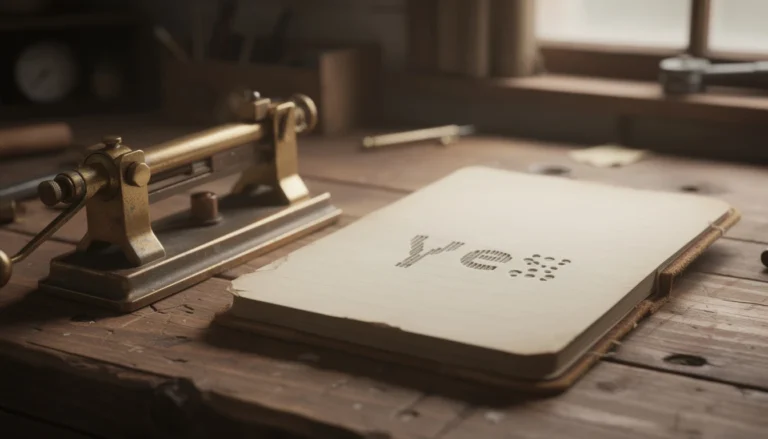
Morse code stands out as one of the most fascinating methods for representing language using symbols. The letter ‘A’ plays a notable role, attracting both enthusiasts and newcomers exploring communication through dots and dashes (or dit and dah). Understanding how ‘A’ fits into the morse code alphabet reveals insights into the history of encoding messages and the practical methods that continue to inspire modern applications. Examining its structure offers a unique look at international morse code and explains why this system remains relevant today.
What is the morse code for ‘A’?
The letter ‘A’ is among the simplest characters to learn: it is represented by a single dot followed by a dash. In practice, this means a short beep or light pulse (the “dit”), immediately followed by a longer one (the “dah”). This straightforward sequence makes ‘A’ especially accessible for those beginning with the morse code alphabet.
The basic nature of the morse code representation of ‘a’ often makes it the first example used in teaching and demonstrations. Its consistent rhythm—short then long—ensures that even in noisy conditions, the signal for ‘A’ remains clear and easy to identify.
Understanding the structure: from dots and dashes to meaning
Each character in morse code uses a distinctive arrangement of two elements: dots and dashes. Some letters are more complex, but ‘A’ is valued for its clarity and speed. Compared to other letters and numbers, its brevity makes it instantly recognizable and quick to transmit.
Gaining proficiency in encoding text in morse code involves learning many patterns, yet characters like ‘A,’ composed of just two signals, allow for faster memorization and recall. This efficiency proves helpful whether practicing solo or communicating in real-life situations.
Exploring different code variants
While the international morse code system prevails today, several variations have existed over time. For example, american morse code, once common on early North American telegraph lines, introduced some distinct characters. However, both systems represent ‘A’ exactly the same way—a dot followed by a dash—demonstrating the universal importance of this letter across regions.
This consistency highlights how foundational ‘A’ is within global morse code alphabets. It also provides a reference point when comparing versions or updating equipment, which is why morse code charts frequently display both major systems side by side.
Morse code rhythm and musicality
The rhythmic quality of morse code—including the pattern for ‘A’—closely resembles musical phrasing. When transmitted audibly, each “dit” and “dah” flows like notes, enabling experienced operators to recognize sequences quickly based on familiar rhythms. The morse code rhythm/music aspect becomes particularly enjoyable once fundamental letters such as ‘A’ become second nature.
Some individuals train themselves to recognize entire words and phrases simply by their cadence. Practicing basic combinations like ‘A’ serves as an effective warm-up, sharpening recognition skills before progressing to more complex sequences built from dots and dashes.
How does one use and learn the morse code representation of ‘a’?
Building confidence with morse code requires repeated exposure and hands-on practice. Beginning with simple characters—especially efficient ones like ‘A’—makes the learning process manageable. Utilizing morse code charts helps with memorization and review, since these visual tools present all letters and numbers for easy comparison.
Today’s learners can also benefit from morse code translation tools. By entering a letter such as ‘A’, anyone can instantly view the corresponding symbol. These interactive resources reinforce pattern recognition, support regular practice, and provide fast reference checks—crucial steps for mastering the morse code for letters and numbers.
Teaching techniques and practice methods
Effective instruction typically starts with audio cues. Playing series of dots and dashes enables listeners to distinguish subtle variations; because ‘A’ features one quick and one slow note, it is often introduced alongside brief symbols like ‘E’ (just a dot) and ‘T’ (just a dash). Mastering these basics lays the groundwork for advanced study.
Printable and digital morse code charts are staples in educational settings. Writing out patterns, tapping them on surfaces, or signaling with flashlights all help deepen memory retention. Short, focused sessions that repeat core letters consistently build fluency.
Using technology to aid morse learning
Beyond charts, many learners turn to mobile apps or online programs specifically designed for encoding text in morse code. Entering ‘A’ may trigger audible feedback, flashing lights, or haptic responses, making lessons immersive and engaging for various senses. Translation tools provide real-time correction and ensure proper technique as skills develop.
For live practice, software simulation platforms connect participants worldwide for timed exercises. These platforms allow immediate application of patterns, improving both sending and receiving abilities—starting with the simplest forms, like ‘A’, before moving to more complex messages.
Comparing ‘A’ with other morse code letters and numbers
Not all characters in the system are as concise as ‘A’. Certain letters require multiple dots or dashes, increasing both transmission time and cognitive load. Comparing entries from the morse code alphabet reveals sharp differences: for instance, where ‘A’ is completed in two beats, others—like ‘Q’ (dash dash dot dash)—are far more involved.
The contrast grows when examining numbers, each of which uses five signals. This difference underscores why starting with short, direct sequences such as ‘A’ is recommended for building a strong foundation. Familiarity with both letters and numbers in morse code brings valuable perspective and boosts overall progress.
- ‘A’: .- (dot dash)
- ‘B’: -… (dash dot dot dot)
- ‘C’: -.-. (dash dot dash dot)
- ‘5’: ….. (five dots)
- ‘0’: —– (five dashes)
This step-by-step approach supports systematic improvement, beginning with simpler signals and advancing to more complex ones as mastery develops.
Frequently asked questions about morse code for ‘A’
What is the exact morse code for the letter ‘A’?
The letter ‘A’ in international morse code is represented by a single dot followed by a dash. This translates to “.-” using standard notation. The first signal is pronounced “dit,” followed by “dah” for the second signal. It is among the fastest and most recognizable symbols in the morse code alphabet.
- Dot (.)
- Dash (-)
Are there any differences between international and american morse code for ‘A’?
No, both international morse code and american morse code depict the letter ‘A’ identically. The character consists of one dot followed by one dash. While several letters and symbols differ between the two systems, ‘A’ functions as a universally shared symbol.
| System | Letter ‘A’ |
|---|---|
| International morse code | .- |
| American morse code | .- |
How do morse code translation tools help with learning ‘A’?
Morse code translation tools let individuals input letters or words and immediately view or listen to their morse equivalents. For the letter ‘A,’ entering it into a tool will display “.-” and may generate the associated sound pattern. These tools serve as convenient references, accelerate practice, and reinforce memory through instant feedback.
- Type in a letter to see the code
- Listen to the pattern for auditory learning
- Compare with other letters and numbers for context
Why is mastering the rhythm of ‘A’ important in morse code practice?
The rhythm—dot then dash—teaches learners to distinguish between short and long sounds, crucial for both sending and receiving messages accurately. Understanding this foundational beat allows easier expansion into longer sequences and fosters sensitivity to overall morse code rhythm/music, which experienced users rely on for quick communication.
- Improves reaction time to recognizable patterns
- Supports audible differentiation between similar symbols