Morse code has fascinated enthusiasts of secret messages and long-distance communication for more than a century. Every letter, number, and punctuation mark is assigned its own sequence of dots and dashes, forming an efficient system that does not rely on spoken language. Some symbols within the alphabet are especially memorable due to their distinctive patterns or historical roles. The representation of letter p in morse code stands out as a great example, offering both technical intrigue and cultural significance worth exploring.
Understanding how morse code works
Before delving into the details of the morse code for letter p (.–. or ·−−·), it is helpful to understand how this ingenious system operates. Morse code uses just two building blocks: short signals known as dots and longer ones called dashes. By arranging these basic elements in various sequences, each character claims a spot on the morse code alphabet chart.
This straightforward method became so effective thanks to years of refinement and adoption under the international morse code standard. Originally developed for telegraphy, morse code soon found its way into maritime operations, military transmissions, and amateur radio. Its influence on global messaging is hard to overstate, as it provided a universal means of clear communication when technology was limited.
The specific pattern for p in morse code
The symbol for the letter p distinguishes itself with a rhythmic signature. In traditional notation, p in morse code appears as .–., which translates visually and audibly to dot-dash-dash-dot. Each part corresponds to either a brief click (dot) or an extended tone (dash).
For those practicing by ear, the audio or phonetic representation is “di-dah-dah-dit.” This catchy rhythm not only aids memorization but also helps learners recognize the pattern quickly during live transmissions, where speed and clarity matter most.
How does p compare to other letters?
Morse code assigns a unique sequence to every letter, and comparing them can reveal the logic behind the system’s efficiency. For example, morse code for other letters like q (–.-), r (.-.), and s (…) differ noticeably from p’s .–.. Observing these differences assists learners in avoiding confusion and improving accuracy when encoding or decoding messages manually.
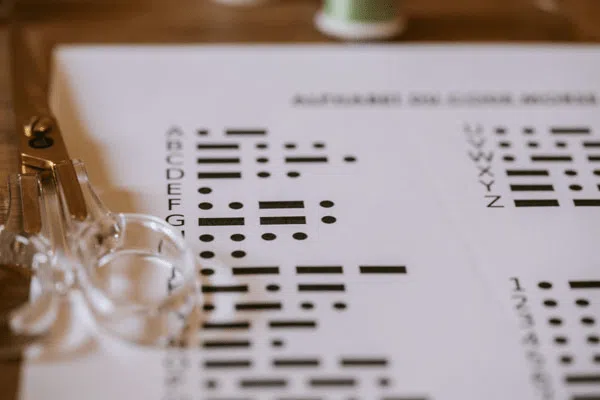
Organizing all symbols in a list of morse code for letters makes it easier to notice shared features and distinct traits. Some individuals find that connecting the shapes and lengths of these patterns strengthens retention. Regular reference to a morse code alphabet chart supports overall fluency and provides a handy visual resource.
- P: .–. (dot-dash-dash-dot)
- Q: –.- (dash-dash-dot-dash)
- R: .-. (dot-dash-dot)
- S: … (dot-dot-dot)
- T: – (dash)
A closer look at the origins of morse code
The historical background of morse code explains why certain symbols, including the one for p, have taken their current forms. Samuel Morse and Alfred Vail introduced early versions in the 1830s, originally designed around American English letter frequency. Later, the international morse code standard brought key modifications, allowing the code to be used globally and across different languages.
These changes led to greater consistency, ensuring that today the morse code for letter p is recognized worldwide regardless of the country or service transmitting the message. This shared code has proven vital in scenarios ranging from wartime correspondence to emergency rescue, where distinguishing between similar symbols—like P, D, or Q—can be critical.
Learning and practicing the morse code for letter p
Using visual charts and mnemonic aids
For newcomers, a morse code alphabet chart serves as the ideal starting point. It lays out all the information in a way that highlights how common letters often receive shorter, simpler morse code symbols compared to rarer ones like Q or Z. To remember the morse code for letter p (.–.), many learners build associations with the phrase dot-dash-dash-dot or repeat the phonetic version “di-dah-dah-dit” until it sticks.
Some prefer to use flashcards or create printable lists, while others enjoy sketching diagrams to visualize the sequence. Engaging multiple senses during practice accelerates learning, especially if reviews are frequent and varied.
Harnessing digital tools for mastery
Modern resources offer significant benefits for mastering morse code. A morse code translator tool provides instant feedback by converting typed text into morse code symbols (dots and dashes) and vice versa. These applications let users experiment with different letters, streamlining study sessions and reinforcing correct associations.
Many apps include listen-and-repeat exercises, making it easy to hear the unique rhythm of .–. and match personal attempts to the standard. With consistent exposure, recognizing p in morse code—both visually and by sound—becomes automatic.
Practical uses and fun facts about morse code symbols
Contemporary relevance of morse code
Even with today’s advanced communications, morse code still plays an active role in select communities. Amateur radio operators rely on its dependability, especially when signal strength is low or interference is high. Emergency services also train with concise, unmistakable signals, ideal for urgent situations.
The ongoing appeal of morse code lies in the challenge it presents. Decoding strings of symbols into words requires focus and sharpens listening skills, providing both practical value and mental exercise.
Engaging with morse code beyond learning
Morse code frequently appears in puzzles, escape room challenges, or playful secret notes. Including the representation of letter p in morse code in creative writing or games offers a novel way to test comprehension. Translating names, clues, or entire messages into dots and dashes remains a favorite activity for cryptography fans.
Experimenting with custom messages using online translators keeps practice enjoyable and memorable. The blend of logic, rhythm, and creativity ensures that even a single symbol like p can spark lasting curiosity and engagement.
Questions about p in morse code and related topics
What is the morse code for letter p?
The morse code for letter p is .–., corresponding to dot-dash-dash-dot in classic notation. Phonetically, it is described as “di-dah-dah-dit.” Remembering this rhythm helps make recall much easier, particularly for audio-based recognition.
- Dot-dash-dash-dot
- Phonetic: di-dah-dah-dit
How can one practice recognizing p in morse code?
Practice by consulting a morse code alphabet chart or using a morse code translator tool to convert the letter p into its symbolic form and back again. Listening repeatedly to audio samples, focusing on the distinctive “di-dah-dah-dit,” builds familiarity. Combining visual study with hands-on translation rapidly increases recognition.
- Review printed or digital charts
- Use interactive web-based tools
- Listen to repeated audio demonstrations
Why do some letters in morse code resemble each other?
Similarities exist because designers aimed to make common letters quick to send and easy to distinguish by ear. The morse code for other letters (such as q, r, s, etc.) near p on the alphabet chart may share beginnings or endings, but subtle variations ensure each code is unique. Comparing groups side by side in a table highlights these relationships:
| Letter | Code |
|---|---|
| P | .–. |
| Q | –.- |
| R | .-. |
| S | … |
Is the pronunciation or rhythm of p in morse code important?
The pronunciation and rhythm of morse code are crucial for learning and transmitting messages effectively by sound. The sequence “di-dah-dah-dit” uniquely identifies the letter p, supporting rapid and accurate transmission. Practicing this rhythm improves both sending and understanding, especially in real-world scenarios.