
The world of morse code is filled with fascinating logic and memorable patterns. Among all letters, the letter o stands out thanks to its unique signal. This article takes a closer look at the morse code representation for o, how it fits within the morse code alphabet, its use as a dash (long beep), and its role in international standards. Anyone interested in encoding and decoding morse code or searching for the letter o in a chart will find practical tips and clear explanations here.
Understanding the basics of morse code
Developed in the 1830s, morse code relies on combinations of dots and dashes to represent both letters and numbers. By transforming language into sequences of sounds or flashes, this system revolutionized worldwide communication. Each symbol has a distinct pattern, which helps prevent confusion when signals are received under difficult conditions.
The principle behind the morse code alphabet allows anyone to encode and decode messages using rhythm or light. Every character is assigned a specific sequence, making reliable transmission possible—whether by sound, visual cue, or electronic signal.
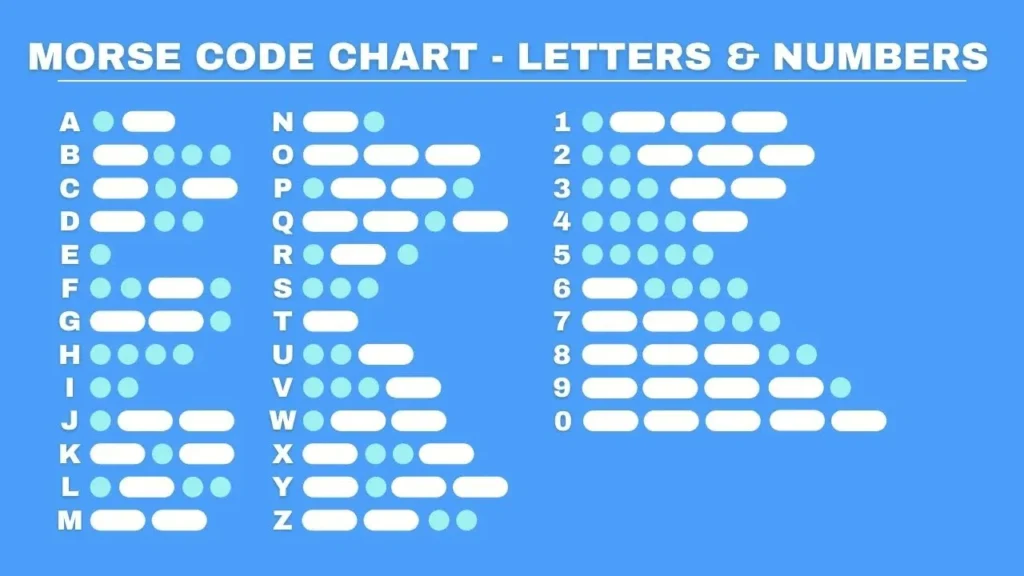
What is the morse code representation for o?
When learning the morse code alphabet, memorizing each letter’s pattern speeds up progress significantly. The morse code for the letter o uses a single type of signal: the dash, also known as a long beep or dah. Specifically, the morse code representation for o is three consecutive dashes.
On audio equipment, these three long tones are easy to distinguish from shorter patterns. Visually, each dash is shown as “–”, while the full code for o appears as “–––”. This consistent structure guarantees clarity during transmission, even over noisy lines or radio interference.
How is o signaled and recognized in international morse code?
In the international morse code standard, every letter receives an individual combination of elements. The dash (long beep) for o means that whenever three continuous dashes are heard, the receiver immediately recognizes the letter o.
This consistency across languages and countries enables operators around the world to accurately send and receive messages. International morse code remains relevant not only historically but also among amateur radio enthusiasts and in emergency communications.
- The morse code for o: ––– (three dashes)
- It consists solely of dashes, without any dots
- The sound produced: three evenly spaced extended tones
Exploring the morse code alphabet and charts
Every letter and number in English matches a unique sequence within the morse code alphabet. These sequences are often displayed in a morse code chart or list for quick reference. Such charts help learners memorize the various patterns and serve as useful lookup tools for those working on encoding and decoding morse code efficiently.
The letter o belongs to a broader collection, fitting between more complex combinations used for other characters. In any morse code chart, o is notable as one of the few letters composed entirely of dashes.
Patterns for similar letters in morse code
The morse code for letters frequently follows logical groupings. While o is represented by three dashes, e is indicated by a single dot. Letters like s (“…”) and h (“….”) rely on repeated dots, providing contrast to o’s series of dashes.
A detailed morse code chart highlights not only such differences but also the overall efficiency of the system. Recognizing patterns and variations sharpens skills when sending or interpreting coded messages.
Position of o in the morse code binary tree
An effective way to visualize morse code structure is through the morse code binary tree. In this diagram, each branch decision—left for a dot, right for a dash—guides users toward the desired character. Starting at the root, moving right three times leads straight to o, since three dashes in succession identify this letter.
This binary arrangement reinforces the rule-based approach essential for encoding and decoding morse code. Visual tools like the binary tree support memorization by offering a spatial perspective alongside traditional lists or charts.
Techniques for encoding and decoding morse code signals
Whether transmitting messages through tapping, flashing lights, or digital means, mastering the encoding and decoding of morse code signals requires practice. For example, the dash/dah for o must be timed precisely. A dash typically lasts three times longer than a dot, making the distinction straightforward for listeners and observers alike.
Modern resources, including morse code translator tools, help simplify and speed up translation. Those seeking fluency often combine online translators with regular drills, listening exercises, and handwritten practice sheets based on morse code charts.
- Practice rhythmic clapping or tapping to reinforce dash and dot timing
- Create flashcards featuring different morse code representations for faster recall
- Train using audio files that distinguish between short and long signals
Practical applications of the letter o in morse code
The recognizable three-dash pattern for o makes it crucial in certain words and callsigns. For instance, in SOS (“… — …”), the letter o sits at the center, playing a key role in distinguishing this famous distress signal. Knowing the precise sound and spacing for o ensures clarity during real transmissions.
Proficiency in coding and decoding morse code enhances communication accuracy in emergencies, amateur radio contacts, and educational activities. Familiarity with morse code signals—especially straightforward ones like o—increases confidence and reliability during exchanges.
- SOS as an emergency call: the central o is identified by three dashes
- Navigational aids and light signals frequently use “–––” for o
- Competitions test recognition of multiple consecutive dashes
Frequently asked questions about the morse code representation for o
What is the exact morse code for the letter o?
The morse code for the letter o is three dashes, commonly written as “–––” or spoken as three long beeps (dah dah dah). Here is how it appears:
- Morse code (visual): –––
- Morse code (spoken): dah dah dah
This pattern contains no dots and is easily recognized during transmission.
How does the morse code binary tree help identify the letter o?
The morse code binary tree organizes characters by sequential decisions: move right for each dash, left for each dot. Beginning at the origin of the tree, moving three times to the right reaches the leaf node representing o, corresponding to its code of three dashes. This method provides a visual framework for memorizing intricate codes.
- Left = dot
- Right = dash
- O = right-right-right (dash-dash-dash)
Why does o use only dashes in international morse code?
The choice of three dashes for o creates a clear auditory and visual separation from other letters. Using exclusively long signals reduces the risk of errors amid background noise. This design principle runs throughout the morse code alphabet to balance simplicity, efficiency, and error prevention in practical scenarios.
Can a morse code translator detect the o automatically?
Automated morse code translator programs analyze incoming sequences of dots and dashes, converting them into text instantly. When three consecutive dashes appear, the software recognizes and outputs the letter o. Accuracy depends on correct input timing and signal clarity, yet most translators adhere to the international standards reflected in morse code charts.
- Manual translation requires understanding of patterns
- Digital translators map sequences to a morse code list internally